Shrimp Farming Water Treatment

Shrimp farms depend on stable water chemistry. Ammonia spikes, low dissolved oxygen, and pathogenic bacteria buildup are leading causes of reduced yields and disease outbreaks in intensive and semi-intensive ponds. Left untreated, these conditions slow growth, raise mortality, and make harvest results unpredictable.

Super AquaPros™ is successfully used at Royal Seas Shrimp Farm to introduce probiotic bacteria, remove sludge, improve food conversion, reduce pathogens, and increase survival rates. It introduces a concentrated blend of naturally occurring bacteria selected to accelerate the breakdown of organic waste, ammonia, and nitrite in shrimp ponds. Regular application supports a more stable microbial balance, helping ponds process bio-load more efficiently between water exchanges.
This treatment supports water quality management — it does not replace proper stocking density, feed management, aeration equipment, or veterinary diagnosis of disease outbreaks. Ponds with severe existing contamination or equipment failure should be evaluated by a qualified aquaculture specialist before treatment.
  1. Test baseline water parameters: ammonia, nitrite, dissolved oxygen, pH, and temperature.
  2. Calculate dosage based on pond volume. [Insert dosage formula/rate from the product label.]
  3. Distribute evenly across the pond surface. [Insert recommended time of day/conditions.]
  4. Reapply on the manufacturer-specified interval or after a major water exchange.
  5. Monitor water parameters weekly and adjust dosage as needed.
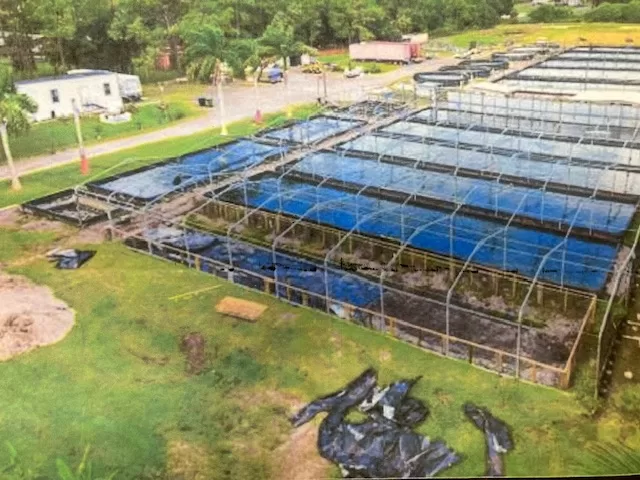
Aerial View of Royal Seas Shrimp Farm and 35-Count, Large Shrimp, Ready for Market

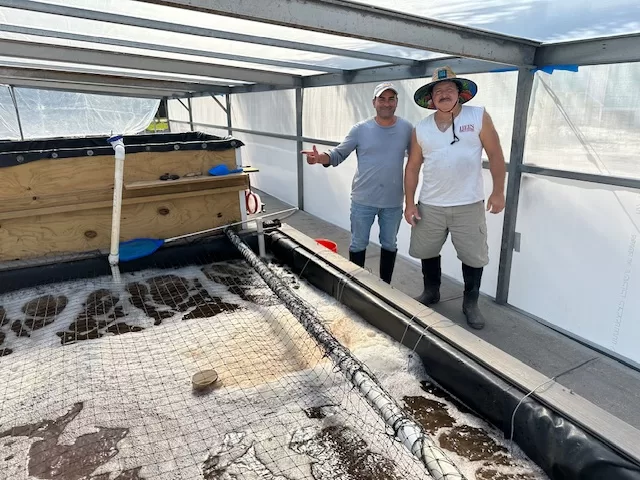
Shrimp Nursery Tanks, with Royal Sea Farms Manager, Nelson, and owner, Jeff Green
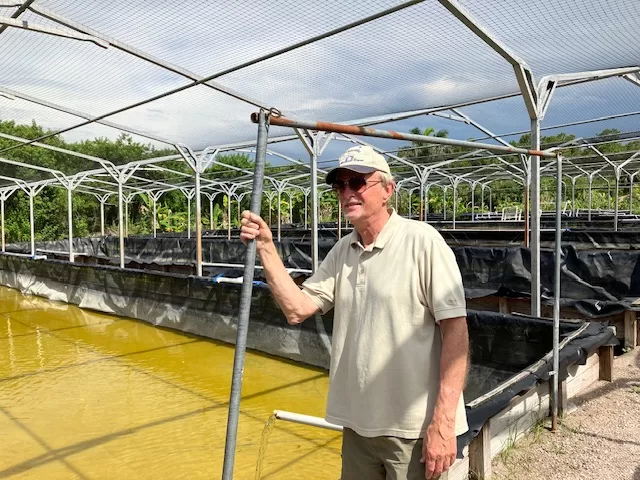
Ron Pifer, the Developer of Super AquaPros, standing by the Shrimp, Grow-Out Raceways
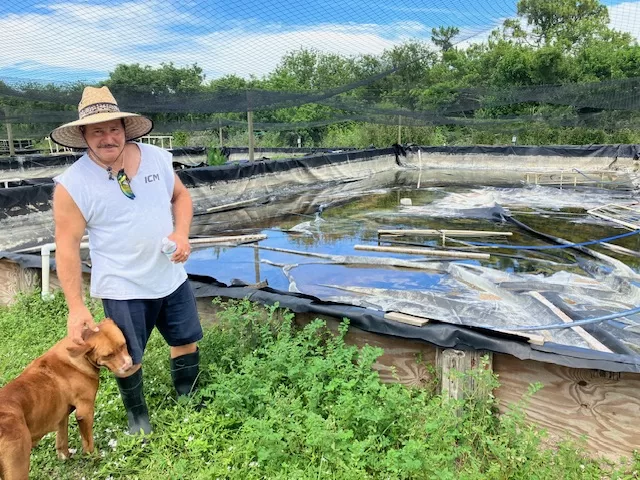
Royal Seas Shrimp Farm Owner, Jeff Green, & Brownie, standing by a Square Shrimp, Grow-Out Tank