The Biological Process
Your pond or lagoon already has bacteria. Lots of them. Most water systems are in balance between helpful organisms and problematic ones. When algae takes over, it’s usually because two things happened: excess nutrients and an imbalance in the bacterial community.
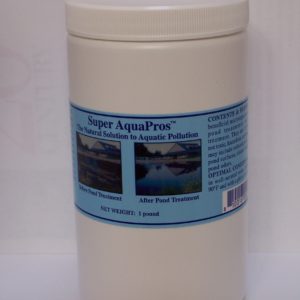
Super AquaPros™ adds specific strains of bacteria that are aggressive about consuming excess nitrates and phosphates, which are found in the organic portion of the sludge. Meanwhile, as they feed on nutrients and break down dead organic matter, they create conditions where the water naturally stabilizes.
The process is gradual. Visible changes usually show up within 2–4 weeks. Green, or blue-green water begins to clear, as the algae nutrients are removed from the water column, and the tiny phytoplankton algae begin to disappear. If you’re dealing with thick algae mats, they’ll shift from dark green to yellow to brown to black as they lose their nutrient source and decay. It’s not pretty in the middle stages, but it’s the sign the system is correcting itself.
Temperature and aeration matter. Bacteria are more active in warmer water. If your pond has movement—from a fountain, aerator, or circulation system—results come faster because the bacteria reach more water more quickly, and their respiration rate is increased.
Tell it like people experience it
Ornamental ponds (1,000–10,000 gallons) that turn green every summer respond well. Usually, consistent monthly treatment keeps them clear. If you let algae get thick first, it takes longer to clear—typically 6–8 weeks.
Larger lagoons (100,000+ gallons) used for livestock watering or water storage need bigger applications, but the principle is the same. One application per month during summer usually maintains clarity if the water has decent movement.
Fish ponds tend to respond quickly because you're often already managing them with feeding and filtration. The probiotic bacteria add another layer of water quality without competing with whatever system you already have in place.
Retention basins and detention lagoons for runoff or stormwater benefit because they tend to accumulate nutrients and sediment. Regular treatment prevents the buildup that leads to smell and algae problems.
Be real about when results are slow
No aeration or water movement: Bacteria take longer to spread throughout the system. Treatment still works, but it’s slower.
Very cold water (below 50°F): Bacterial activity slows significantly. You can still treat, but expect results to take longer—maybe 8–12 weeks instead of 4–6.
Severely eutrophic ponds: Extremely high nutrient levels, thick sludge on the bottom. Need more aggressive treatment upfront—every two weeks for the first month or two, then back off. It still works, but it’s addressing a bigger problem.
If algae comes back aggressively: It usually means nutrients are still entering the pond—leaf fall, fertilizer runoff, animal waste. The treatment handles the symptom; you’ll need to address the source to prevent it from returning.
A realistic timeline
You apply the treatment. Water might stay green or cloudy for the first 1–2 weeks. The bacteria are colonizing and beginning to consume nutrients. Don't panic.
Clarity improves noticeably. If you had green water, it starts shifting toward light green, then greyish. Floating algae begins breaking up instead of staying in solid mats.
Most systems show significant improvement. Water is noticeably clearer. Rooted algae at the bottom might change color at the tips. Bottom sediment might look darker as bacteria break down accumulated organic matter.
Monthly applications keep the nutrient levels from climbing back up. Water stays clear as long as you treat consistently during the season.
Nutrients gradually accumulate again (especially in fall from leaf drop). If a pond had a nutrient problem initially, the problem will eventually return without continued management.
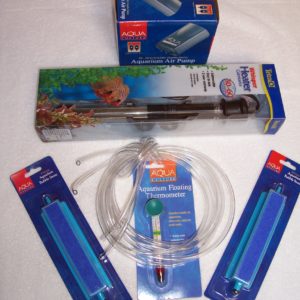
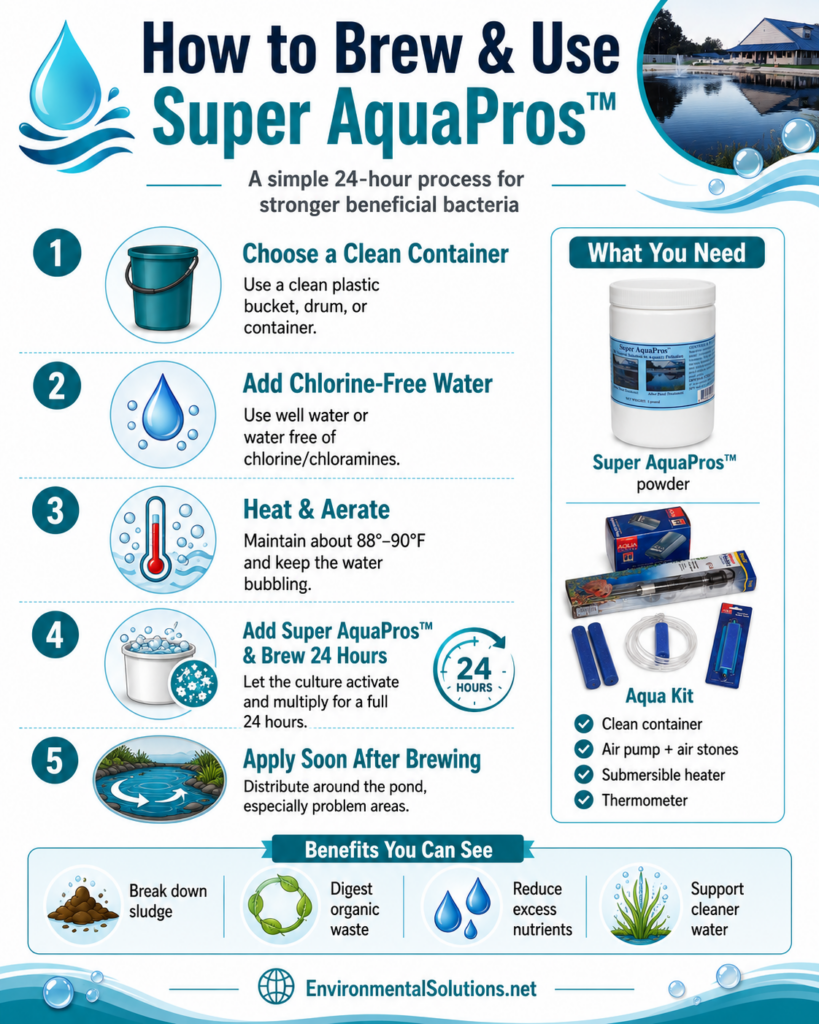
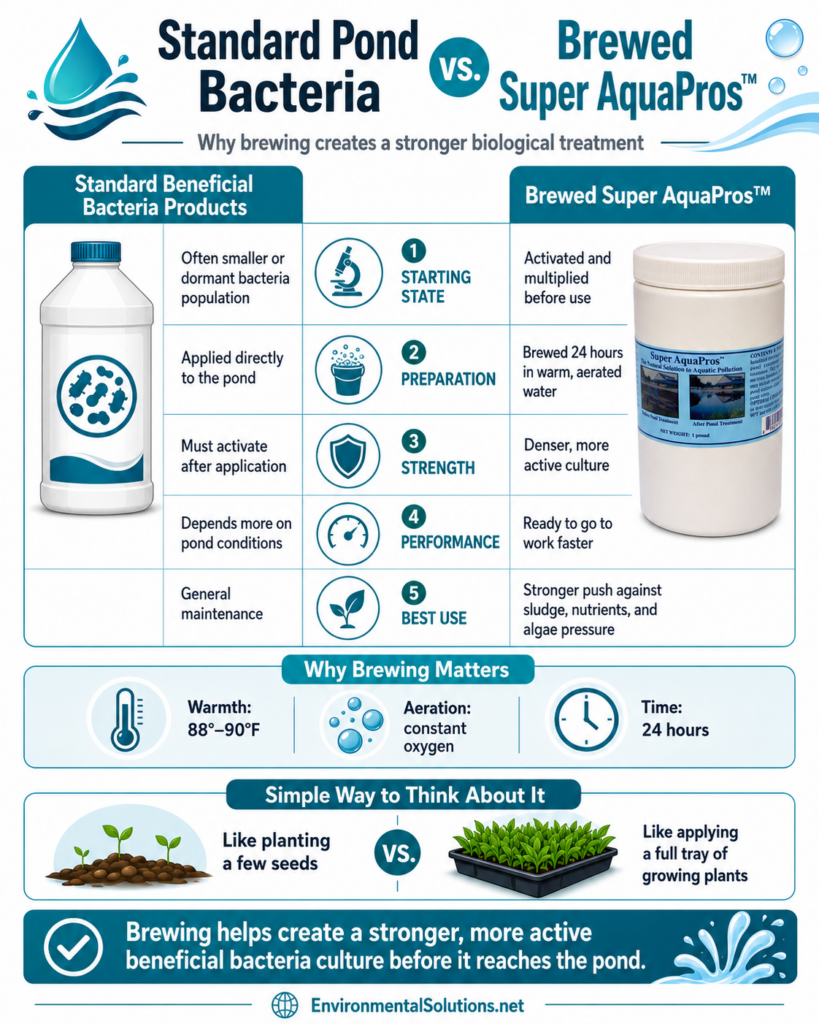
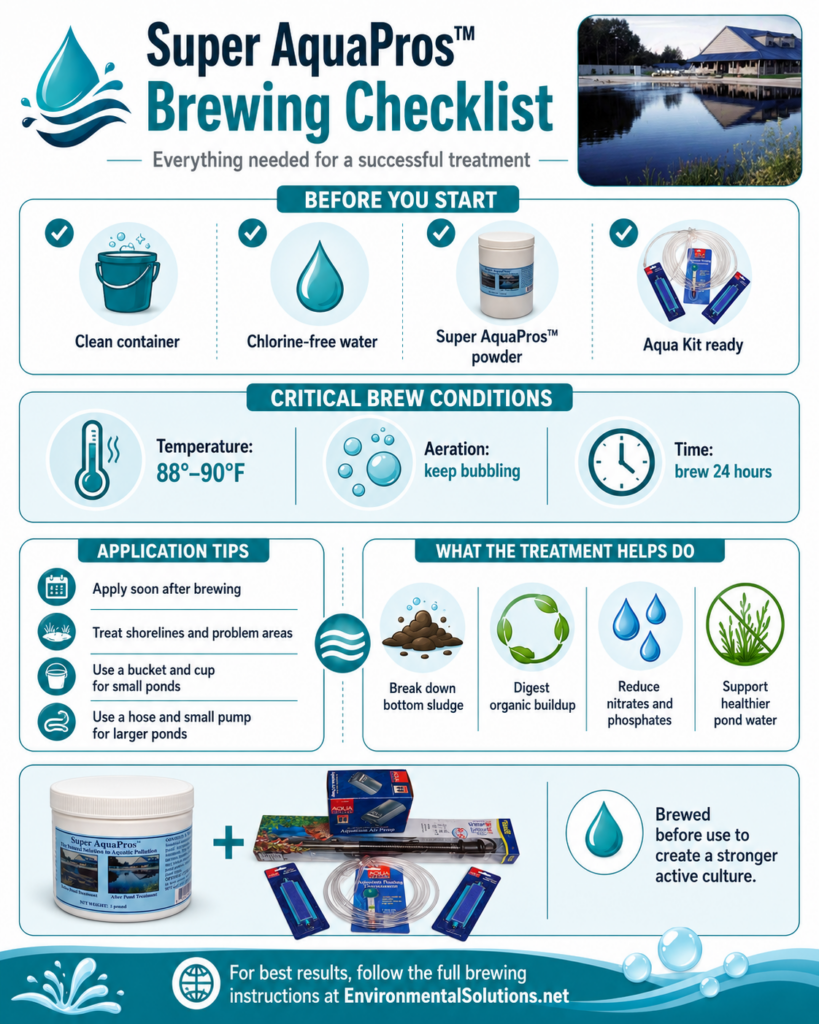
Each jar comes with guidelines based on pond size. Mix the concentrate with water using an Aqua Kit—heat and aerate for 24 hours to ramp up the bacterial count to 8 billion CFU per ml.
For a 10,000-gallon pond, you'd use a small amount directly. For larger ponds, mix the concentrate with water in a bucket and distribute it across the pond—better distribution than dumping it all in one spot.
Apply in the afternoon when water temperature is highest. Late May through August is peak treatment season. You can treat in September and April if temperatures allow (above 60°F consistently).
If your pond is severely algae-choked, divide your first application and apply it over 2–3 days rather than all at once. It prevents oxygen depletion from massive algae die-off.
Store it cool and dry. It keeps for years if not opened, but once opened, use within a few months for best potency.


Let us help you restore balance to your water system naturally and effectively.